
Owners of older stone terraces
The classic East Lancashire and Yorkshire housing stock, where original bedding has weathered for a century and mortar is visibly open, cracked or missing along the ridge line.
Roofing & repointing across Lancashire & West Yorkshire
Repointing · Burnley & Lancashire
Crumbling mortar raked out and replaced with a correctly mixed, properly bedded joint; the cheapest piece of roof work there is, and the one that prevents the expensive failures that follow when it is left.
Repointing is a core trade here, not a sideline · over 10 years' experience · £1 million public liability · free fixed-price quote
Repointing specialists
One of the two core trades of the business
10+ years' experience
Local stone, slate and lime-bedded roofs
£1m public liability
Public liability cover on every job
Workmanship guarantee
Confirmed with your quote
What it involves
Mortar at the ridge and verge takes the full force of the weather and holds the most exposed tiles on the building in place. Repointing it is straightforward work, but only if the old material is raked out properly and the new mix is right for the roof it is going onto.
Ridge tiles sit along the apex of the roof, bedded in mortar. Verges are the mortared edges where the covering meets a gable wall. Both are fully exposed to wind, rain and frost, and both rely entirely on the mortar joint to stay watertight and stay put. On the older stone-built terraces around Burnley, Nelson, Colne and over into West Yorkshire, that mortar is often the original lime or an unsuitable strong cement repair from decades ago.
Repointing means removing the failed mortar rather than skimming over it, cleaning the joint back to a sound surface, re-bedding any tiles that have loosened, and pointing with a mix suited to the roof and the exposure. Skimming a thin coat of new mortar over crumbling old material is the single most common bodge in this trade, it looks fine for a season and falls out within a year or two.
You get a fixed price for the work after the roof has been looked at, in writing and free of charge. Where a run of ridge tiles has come fully loose, or the verge has begun to lift the covering, that is discussed honestly, sometimes re-bedding is right, sometimes a dry-fix system is the better long-term answer.
The classic East Lancashire and Yorkshire housing stock, where original bedding has weathered for a century and mortar is visibly open, cracked or missing along the ridge line.
Perished ridge and verge mortar is one of the most commonly noted defects on homebuyer reports. It is also one of the cheapest to resolve properly before completion.
Planned repointing across a group of properties is inexpensive preventative work that stops the emergency call-outs that follow a windy weekend.
What happens if it waits
A gap in a mortar joint is an entry point at the highest, most exposed part of the building. Wind drives rain straight into it, winter freezes the water sitting inside, and the ice opens the joint a little further each time.
Water in an open joint expands as it freezes and prises the mortar apart. A hairline crack in autumn is commonly an open joint with loose bedding by spring, particularly on exposed Pennine-edge property.
Once the bedding fails, the ridge tile is held by nothing but its own weight. A single strong gust lifts it, and a ridge tile falling from the apex onto a pavement, yard or car is a serious matter.
Verges are where wind gets under the covering. With mortar gone, the gable edge lifts slates or tiles progressively inwards, turning a pointing job into a re-covering job.
Rain entering at the verge soaks into the wall head and shows as damp on the inside of the gable, often mistaken for rising or penetrating damp and treated at the wrong end of the building.
Water entering the ridge runs down onto the underlay and, where that has perished, onto battens and rafters, creating the slow timber decay that only becomes visible when it is expensive.
Leaving repointing until other roof work is due, or the reverse, means access costs get paid twice. Bundling the work while access is already in place is the cheaper route.
Repointing is one of the least expensive jobs on a roof and prevents some of the most expensive. Getting it looked at costs nothing, and on most houses the work itself is completed in a single visit.
Our process
Ridge line, hips and verges checked along their full length, along with the condition of the tiles themselves and the covering either side. Photographs provided of what you cannot see from the ground.
You are told which sections have genuinely failed, which are sound, and whether re-bedding, repointing or a dry-fix system is the honest recommendation for your roof.
A written fixed-price quote covering access, materials and the length of ridge or verge being dealt with. Free, with no obligation.
Failed mortar cut and raked out to a sound joint, loose tiles lifted and re-bedded on a fresh bed, then pointed with a mix suited to the roof and finished to a consistent line.
The full run is checked, gutters and ground cleared of debris, and the completed work carries a workmanship guarantee confirmed with your quote.
What you get
A properly bedded ridge and verge is what holds the most exposed part of your covering down in a gale. That is the whole point of the work.
Sealing the verge stops driving rain soaking into the gable head, the cause of a good deal of misdiagnosed internal damp.
This is among the cheapest work on a roof and prevents some of the dearest. Repointing now avoids re-covering a wind-stripped slope later.
Mortar specified for the stone, tile and exposure in front of us, not one strong mix used on everything regardless of what it is bedded against.
A straight, consistently pointed ridge visibly lifts the front of a property, noticeable from the street and at valuation.
Most domestic ridge and verge work is completed in a single visit, with the site left clean and no return trips needed.
Recent work
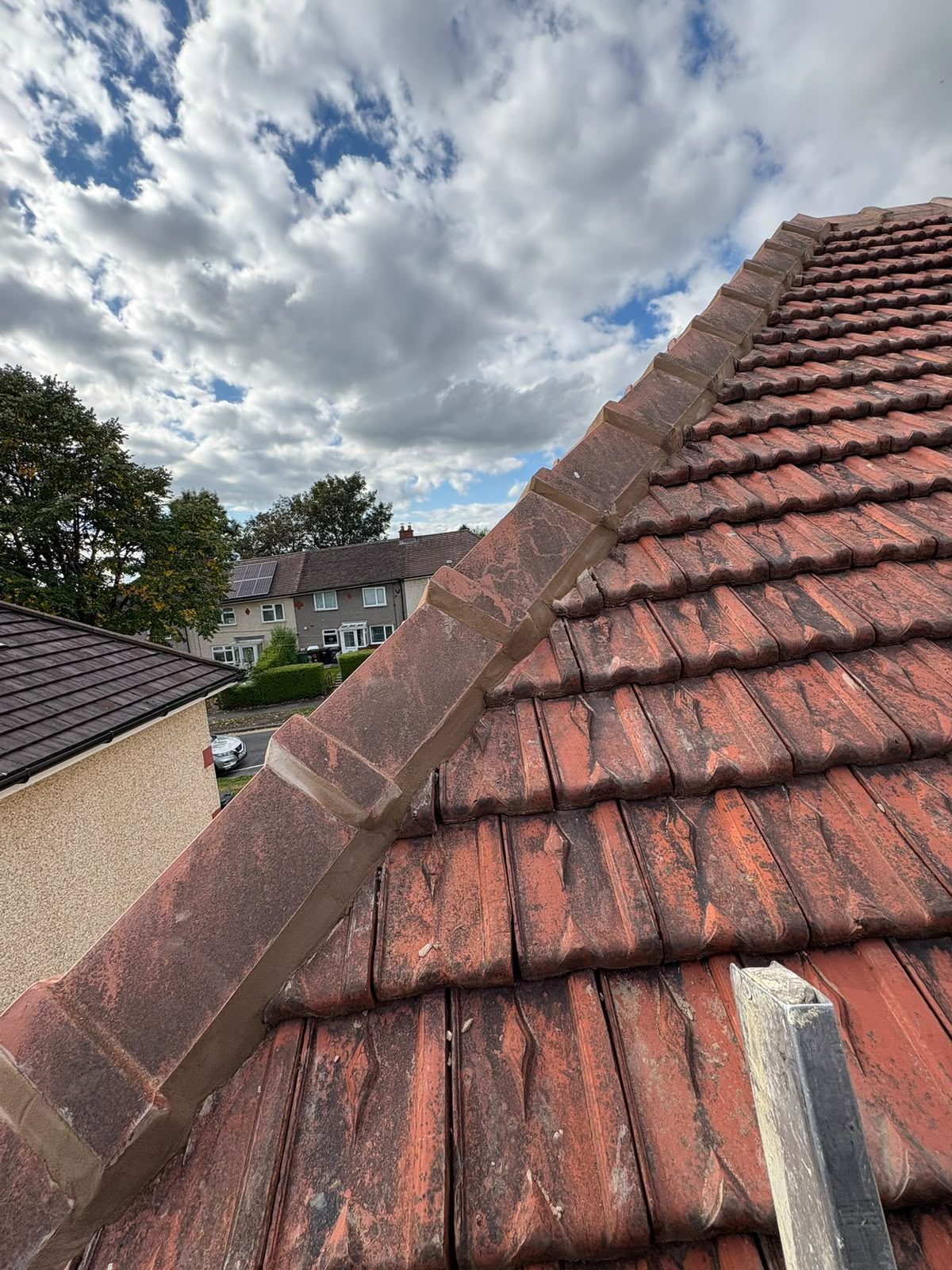
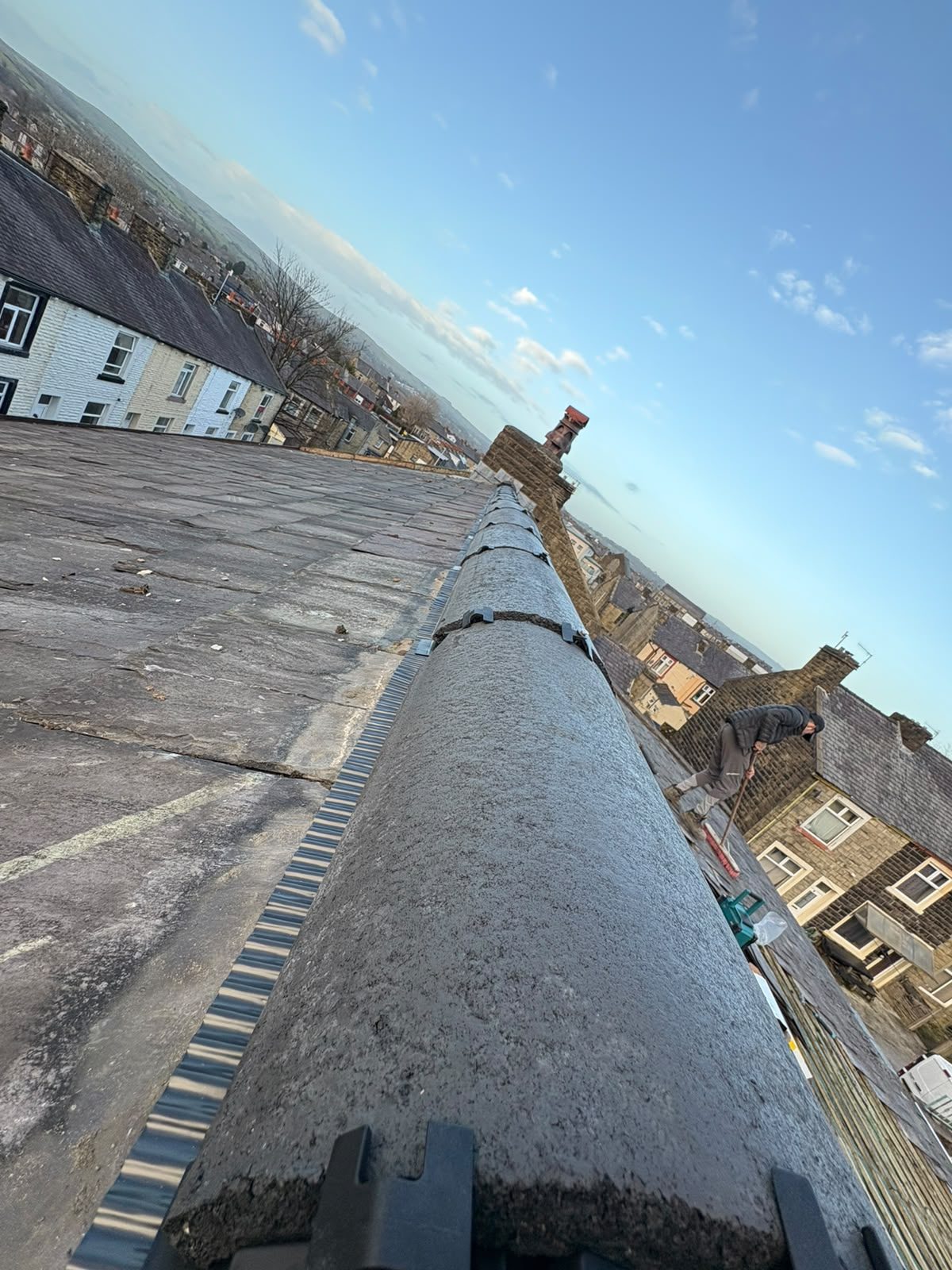
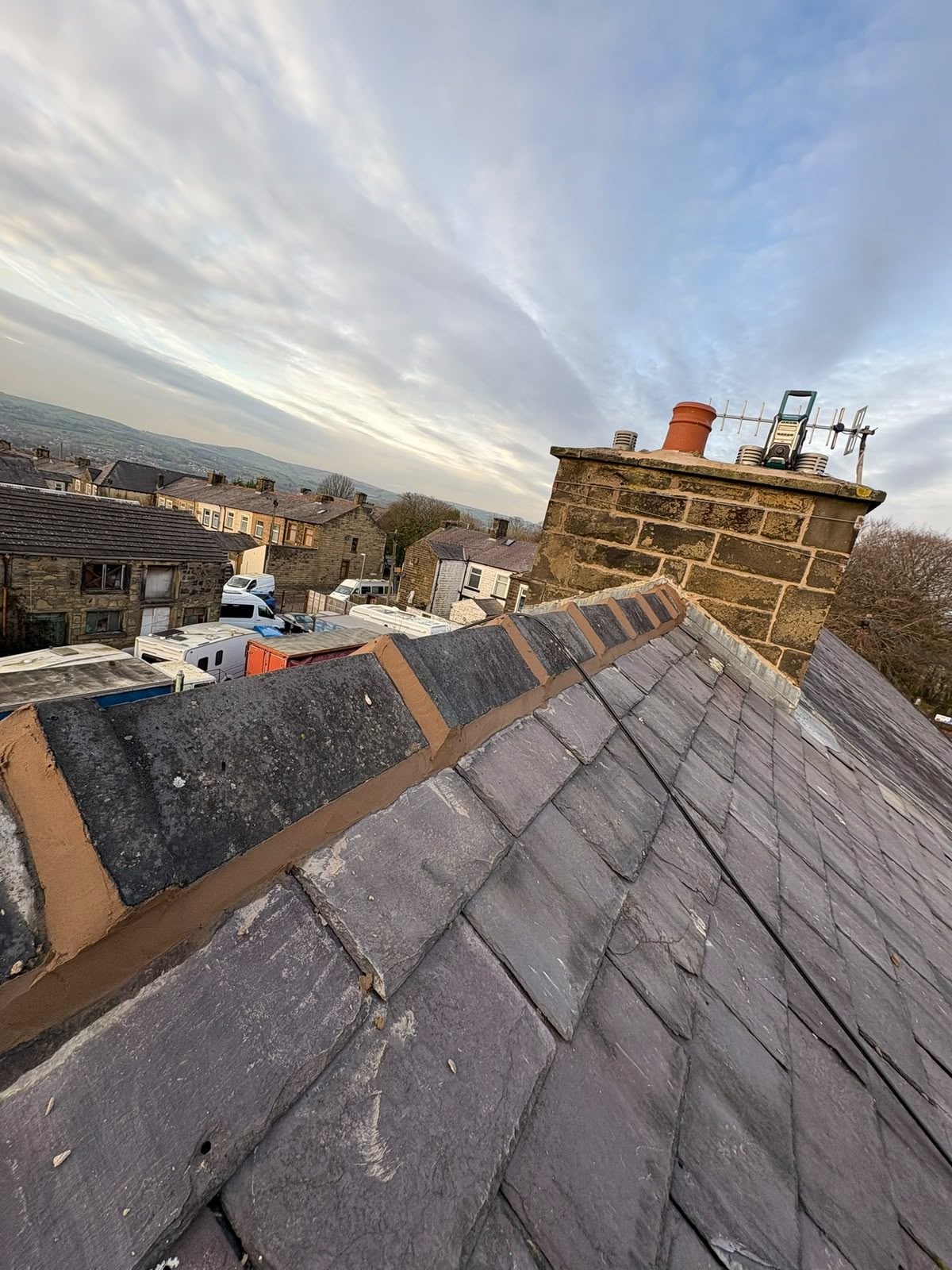
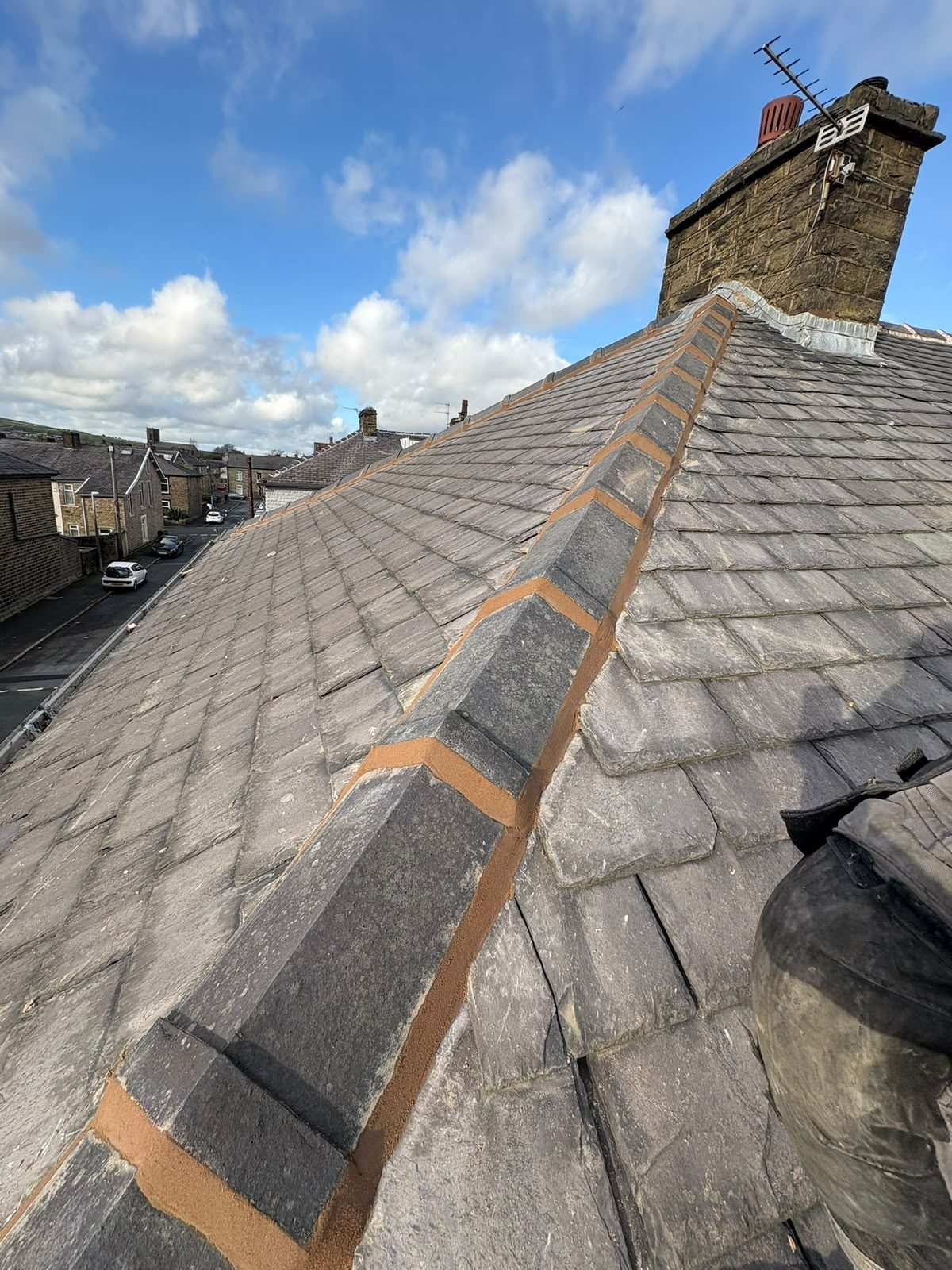
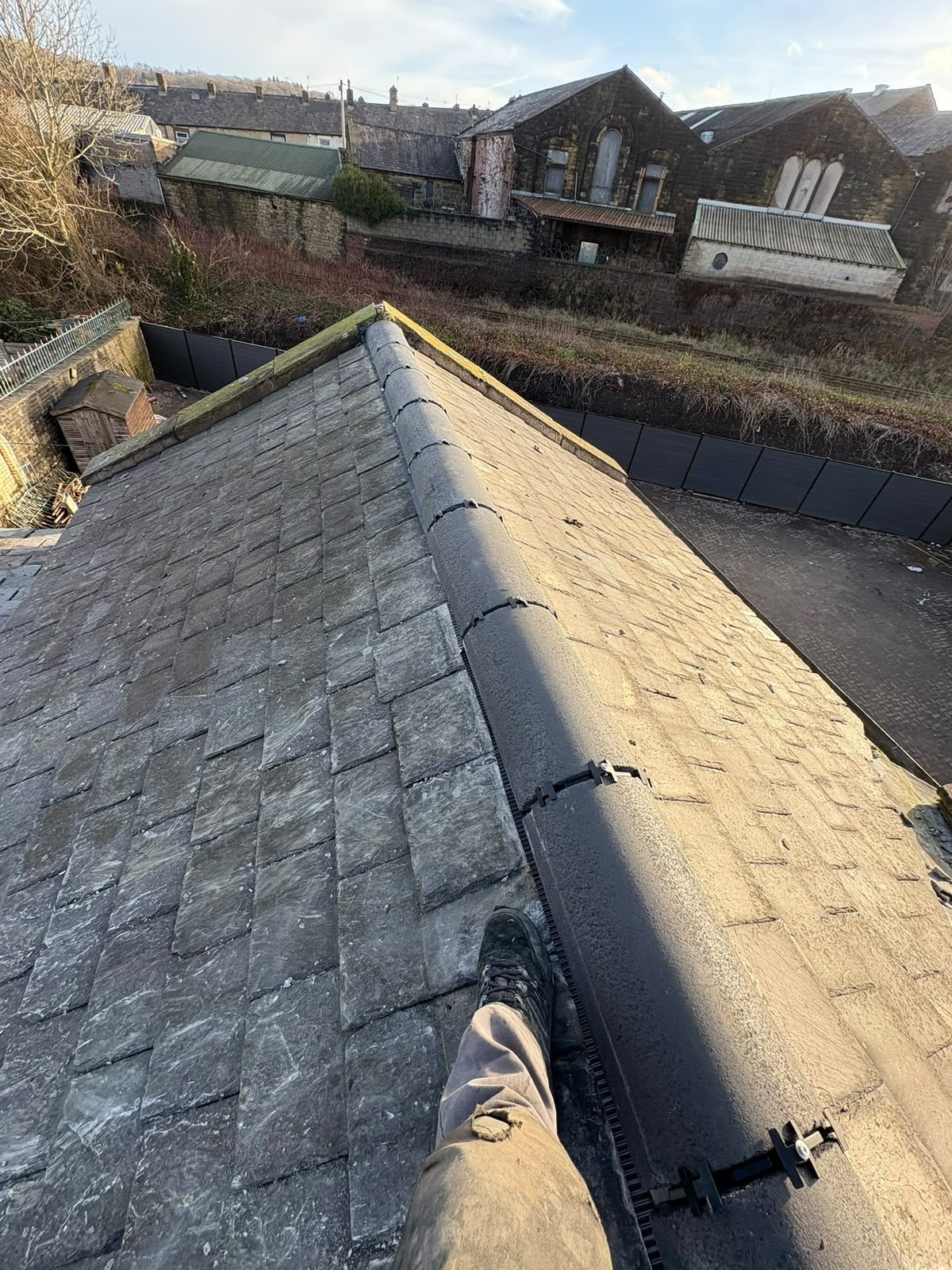
In detail
Repointing sounds simple, and the principle is. The results differ enormously depending on preparation, mix and method, here is what actually matters.
Old mortar is cut and raked back to a firm, clean joint. Anything loose, hollow or crumbling comes out; what remains has to be sound enough for new material to bond to. Joints are cleared of dust and dampened down as needed so the new mix does not dry out before it cures.
This preparation is most of the labour on a repointing job, and it is exactly what gets skipped by anyone offering an unusually cheap price for a ridge line.
Mix strength is matched to what it is bedding. Modern tiles on a modern roof take a standard sand and cement bedding mix; soft local stone and old lime-bedded work need a weaker, more forgiving mix so the mortar fails before the stone does.
Colour is matched as far as the local sand allows, so a repointed section does not read as a stripe across the roof line. Work is avoided in frost and in very hot, drying conditions, both of which ruin a cure.
Where a ridge or hip tile has lost its bed, pointing around it achieves nothing. The tile is lifted, the old bed cleaned off, and it is re-set on a fresh full bed so it is properly supported along its length before the joint is pointed.
Hips are the same principle with more exposure, and hip irons at the eaves are checked at the same time to make sure the bottom tile is genuinely restrained.
Verge mortar is bedded onto the undercloak at the gable and holds the edge of the covering against wind uplift. Failed verge mortar is raked out, the undercloak checked, and the edge re-bedded and pointed to a straight line.
On roofs where the verge has failed repeatedly, dry verge units are worth discussing: mechanically fixed, no mortar to weather, and a sensible option on the most exposed elevations.
Dry ridge and dry verge systems fix mechanically with clips and screws, use ventilated ridge rolls and remove mortar from the equation altogether. On new re-covers and exposed sites they usually make sense.
On older stone property, appearance and match to neighbouring roofs matters, and a well-executed bedded ridge is often the more appropriate choice. Both can be priced so you decide with the numbers in front of you.
The same trade covers the stack: raking out and repointing brickwork or stone, renewing the flaunching around the pots and checking the flashings at the base. Stacks weather harder than any other part of the roof because they are exposed on all four sides.
Where the stack and the ridge are both due attention, doing them on the same access saves the cost of setting up twice.
Based near BB8 0JP, this work is carried out across East Lancashire and West Yorkshire, from stone terraces in Burnley and Colne to hillside properties around Skipton and Keighley.
Most roofs need more than one thing looking at. These jobs are often quoted alongside ridge & verge repointing.
Straight answers
Anything not covered here, ring Samuel on 07534 748896 and ask. You will get a straight answer rather than a sales pitch.
It depends on the length of ridge or verge involved, how much of the mortar has failed and how the roof is accessed. Samuel looks at the roof and gives you a fixed price in writing, free of charge and with no obligation.
Most domestic ridge and verge repointing is completed within a single visit. Longer runs, hips as well as ridges, or jobs needing scaffold take longer, and the expected duration is confirmed with your quote.
A properly raked-out and correctly mixed repoint should last many years rather than a few seasons. What shortens it is skimming over old material or using the wrong mix, which is why preparation and mix specification are the parts of this job that actually matter.
No, and anyone offering to is selling you a problem. New mortar applied over failed material has nothing sound to bond to and comes away, usually within a couple of winters. The old joint gets raked out first.
It is a genuine option, particularly on exposed sites and during a re-cover. Dry systems fix mechanically and remove mortar failure entirely. On older stone property, a bedded ridge often suits the building better. Both are priced if you want to compare.
Not always. Sound sections are left alone and only what has failed is priced. Where the mortar is clearly the same age and condition along the whole run, doing it in one go while access is set up is usually better value than returning twice.
Yes. Stack repointing, flaunching and flashings are part of the same trade, and doing them alongside ridge work on the same access saves setting up twice.
Public liability insurance up to £1 million is carried on every job, and the completed work carries a workmanship guarantee confirmed with your quote.
Repointing is weather-dependent, mortar cures badly in frost. Work is scheduled around suitable conditions, and you will be told honestly if a job needs to wait for a dry spell rather than being carried out in weather that would compromise it.
Repointing is carried out across East Lancashire and West Yorkshire from the BB8 area: Burnley, Nelson, Colne, Clitheroe, Blackburn, Accrington, Preston, Skipton, Keighley, Bradford, Halifax, Leeds and Huddersfield.
Repointing is cheap while it is still repointing. Send your postcode and a photograph of the ridge or gable if you can take one safely, and Samuel will price the work properly.
Send your postcode and a short description of the job. Samuel will arrange a look and price it properly.
Free, no-obligation quote. Your details are only used to price and discuss your job. Prefer to talk? Call 07534 748896.